
Knee Pain Treatment in Jaipur for Better Movement & Strength
Knee pain treatment in Jaipur at Long Life Physiotherapy focuses on helping people who find walking, climbing stairs, standing up or everyday movement difficult because of knee pain or stiffness.
Our physiotherapy approach begins with understanding your symptoms, movement, strength and daily limitations before planning rehabilitation according to your individual needs.
Looking for a knee physiotherapist in Jaipur or knee pain treatment near me? Start with an individual physiotherapy assessment.
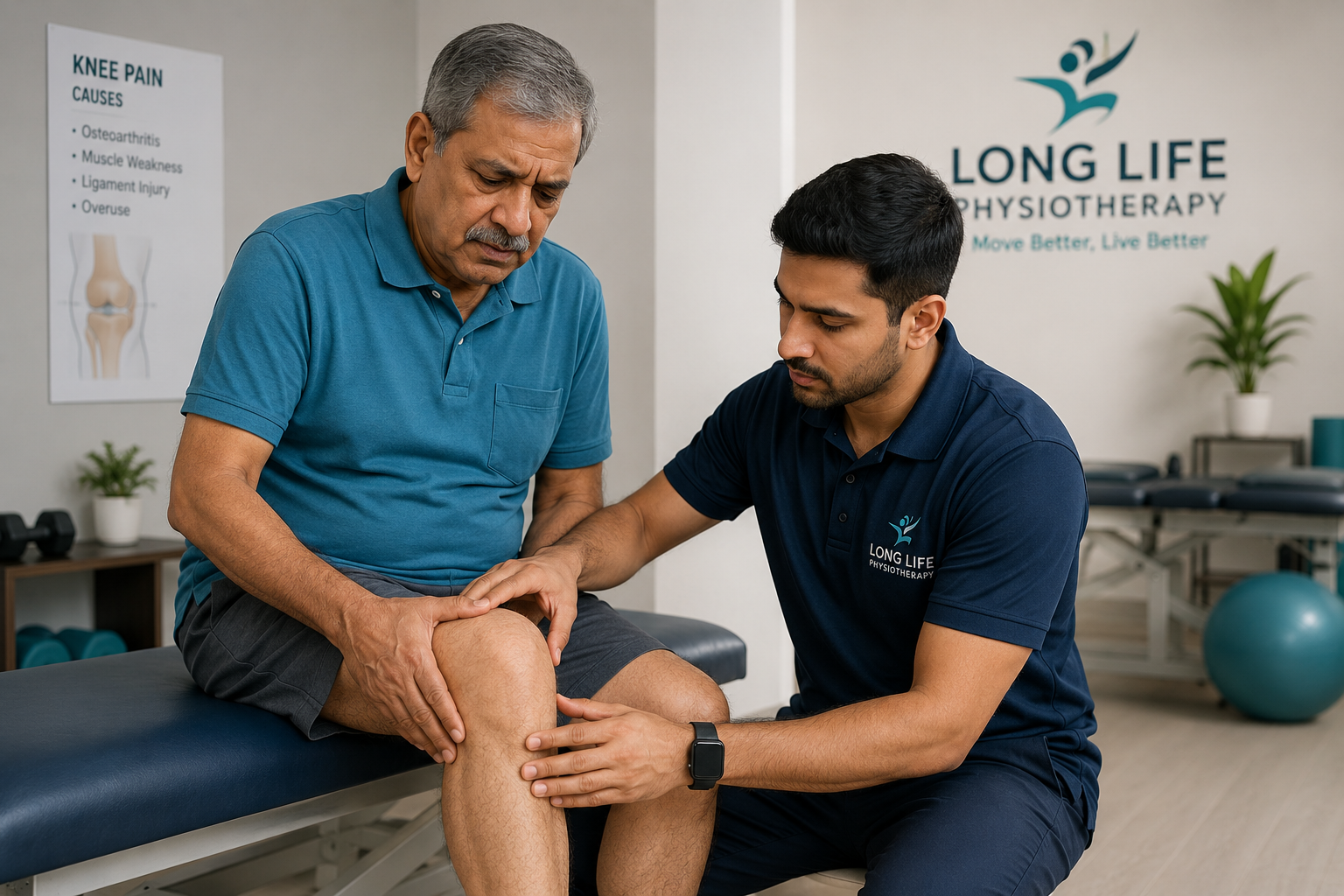
Is Knee Pain Making Everyday Movement Difficult?
Knee pain can become frustrating when simple activities such as walking, using stairs, standing from a chair or bending the knee start feeling uncomfortable or difficult.
At Long Life Physiotherapy, a knee assessment looks at your symptoms, movement, strength and the activities you are finding difficult. This helps guide an appropriate rehabilitation plan based on your individual needs.
Knee pain physiotherapy in Jaipur may be considered when pain, stiffness or weakness is affecting movement and everyday function.
What Are You Experiencing?
Knee discomfort that makes normal walking or longer distances difficult.
Pain, weakness or reduced confidence while going upstairs or downstairs.
Difficulty bending or straightening the knee comfortably during daily activities.
The knee or leg feels weak while standing, walking, getting up or performing everyday tasks.
Knee discomfort when getting up from a chair, sitting down or changing position.
Need broader care for joint, muscle or orthopedic movement problems?
What Can Be Behind Your Knee Pain?
Knee pain can develop for different reasons, and similar symptoms do not always mean the same problem. Assessment helps us understand what may be contributing to your pain and movement difficulty.
Knee Osteoarthritis
Knee osteoarthritis can be associated with pain, stiffness and difficulty with activities such as walking, stairs or getting up from a chair.
Kneecap & Patellofemoral Pain
Pain around or behind the kneecap may become noticeable during stairs, squatting, prolonged sitting, running or other repeated knee-loading activities.
Ligament or Meniscus-Related Problems
Twisting injuries, sports injuries or other knee trauma can affect movement, strength and confidence when returning to normal activity.
Knee Stiffness & Reduced Mobility
Reduced ability to bend or straighten the knee can affect walking, sitting, stairs and other everyday movements.
Knee & Leg Weakness
Reduced strength around the knee, hip or leg can make walking, stairs and repeated daily movements more difficult.
Knee Injury Rehabilitation
After an appropriate diagnosis or medical review, rehabilitation may focus on restoring movement, strength and function for everyday or sporting activity.
That is why knee pain treatment in Jaipur should begin with an individual assessment rather than choosing exercises based only on where the knee hurts.
How Physiotherapy Can Help with Knee Pain
Knee physiotherapy is planned around your current symptoms, movement, strength and the activities you want to return to. The goal is to improve function step by step rather than use the same exercise routine for every patient.
Understand Pain & Movement
We look at how knee pain affects walking, stairs, bending, standing up and other daily activities, along with movement and strength.
Improve Comfortable Knee Movement
Where appropriate, treatment may include movement and mobility work to help the knee move more comfortably during everyday tasks.
Strengthen the Knee & Leg
Progressive strengthening may be used to improve the capacity of the knee, thigh, hip and leg according to your individual needs.
Work on Walking, Stairs & Daily Tasks
Rehabilitation can include practical activities that relate to the movements you need in daily life.
Return Towards Usual Activity
As movement and strength improve, rehabilitation can be progressed according to your work, exercise, sport or everyday activity goals.
Knee Rehabilitation Built Around Your Everyday Goals
Knee pain is not only about what hurts. What matters is how it affects your ability to walk, use stairs, stand up, work or return to the activities that are important to you.
At Long Life Physiotherapy, treatment is guided by assessment findings and your current ability. Rehabilitation can then be progressed according to your response and functional goals.
We begin by understanding your symptoms, knee movement, strength and the activities you are struggling with.
Exercises and functional activities can be progressed according to your ability rather than following the same routine for every patient.
Rehabilitation can work towards practical goals such as easier walking, stairs, sitting to standing and other everyday movements.
Where appropriate, patients may be given exercises and activity guidance to continue between physiotherapy sessions.
Looking for a Knee Physiotherapist in Jaipur?
If knee pain, stiffness or weakness is limiting your movement, you can book an assessment with Long Life Physiotherapy to discuss whether physiotherapy is appropriate for your needs.
Knee pain & movement assessment
Strength & mobility rehabilitation
Walking & stair-focused training
Individual progression based on function
Searching for knee pain treatment near me? Speak with our Jaipur physiotherapy team about an assessment.
Knee rehabilitation is one part of our wider orthopedic physiotherapy services in Jaipur.
When Knee Pain May Need Medical Attention
Many knee problems can be assessed and managed with physiotherapy, but certain symptoms may need medical evaluation before or alongside rehabilitation.
If symptoms are severe, rapidly worsening or associated with significant injury, appropriate medical assessment may be needed.
Rapid or substantial swelling following a fall, twist, sports injury or other knee trauma should be properly assessed.
If you suddenly cannot stand or walk on the affected leg, medical evaluation may be appropriate.
An obvious change in knee shape or position after injury requires prompt medical attention.
Significant warmth or swelling together with fever or feeling generally unwell should be medically evaluated.
A knee that suddenly becomes mechanically locked or cannot bend or straighten normally should be assessed.
Rapidly increasing pain, swelling, weakness or loss of function should not be managed only with home exercises.
If your symptoms are suitable for physiotherapy, rehabilitation can focus on movement, strength and function. When medical assessment is more appropriate, that should take priority.
Start With an Appropriate Assessment
Talk to our team if knee pain, stiffness or weakness is affecting your walking, stairs or everyday movement.
Questions Patients Ask About Knee Pain & Physiotherapy
Practical answers about knee pain, exercise, arthritis, walking, stairs and physiotherapy treatment.
Physiotherapy can help many people with knee pain by addressing problems such as reduced movement, muscle weakness and difficulty with everyday activities.
Depending on your assessment, knee pain physiotherapy in Jaipur may include mobility exercises, progressive strengthening, walking or stair practice and guidance on gradually returning to activity. The treatment plan should match your condition and functional goals rather than using the same exercises for everyone.
Walking can be a useful form of activity for many people with knee pain, particularly when the amount and pace are appropriate for their current ability.
You do not necessarily need to stop moving simply because your knee hurts. However, if walking causes a large or persistent increase in symptoms, significant swelling or instability, an assessment can help determine how your activity should be modified.
Stairs place greater demand on the knee and the muscles controlling the leg than level walking. Pain on stairs can occur with several different knee problems, including kneecap-related pain and osteoarthritis, so the symptom alone does not identify one specific diagnosis.
A physiotherapy assessment can look at knee movement, leg strength and stair control to identify areas that may be useful to address during rehabilitation.
Yes. Exercise and physiotherapy are commonly used as part of conservative management for knee osteoarthritis. Rehabilitation can focus on improving knee movement, strengthening the muscles around the knee and hip, and making activities such as walking, stairs and standing from a chair easier.
If you are looking for knee pain treatment in Jaipur for osteoarthritis, an individual assessment can help determine an appropriate starting level and progression for exercise.
There is no single “best” knee exercise for every person. The right exercise depends on why your knee hurts, how much movement you currently have, your strength and the activities you need to perform.
Knee rehabilitation often uses a combination of mobility, thigh and hip strengthening, functional exercises and gradual activity progression. Exercises should be progressed according to your response rather than copied from a generic routine.
Not every episode of knee pain requires an MRI or X-ray. Whether imaging is useful depends on your symptoms, history, examination findings, previous injury and the condition being considered.
A clinical assessment is often an important first step. If your symptoms or examination findings indicate that imaging or specialist medical review may be appropriate, this can then be discussed with the relevant healthcare professional.
Knee clicking or cracking does not automatically mean that the joint is damaged. Joint sounds can occur without pain and may not be a problem by themselves.
However, if clicking is painful or occurs with swelling, locking, giving way, reduced movement or a recent injury, it is sensible to have the knee assessed rather than relying on the sound alone to determine the cause.
There is no fixed recovery time or number of physiotherapy sessions for knee pain. A mild movement problem and rehabilitation after a significant injury will not follow the same timeline.
Your progress can depend on the underlying condition, duration of symptoms, strength, activity level and rehabilitation goals. Treatment should be reviewed and progressed according to how your knee responds.
Some knee conditions can be managed conservatively with exercise, activity modification and physiotherapy, while others may eventually require surgical assessment.
Physiotherapy cannot guarantee that surgery will be avoided. Its role is to improve movement, strength and function where conservative rehabilitation is appropriate. Decisions about surgery should be made with the relevant orthopedic or medical professional based on your individual condition.
Long Life Physiotherapy provides assessment and rehabilitation for people experiencing knee pain, stiffness, weakness and difficulty with everyday movement in Jaipur.
If you are searching for a knee physiotherapist in Jaipur or knee pain treatment near me, you can contact Long Life Physiotherapy to book an assessment and discuss whether physiotherapy is appropriate for your symptoms.
Talk to Long Life Physiotherapy
If knee pain is affecting walking, stairs or everyday movement, you can speak with our team about an assessment.
Ready to Get Your Knee Moving More Comfortably?
If knee pain, stiffness or weakness is making walking, stairs or everyday activities difficult, an individual physiotherapy assessment can help identify your current movement and rehabilitation needs.
Visit Long Life Physiotherapy in Jaipur to discuss your symptoms and an appropriate plan for improving knee movement, strength and everyday function.
Knee Pain Physiotherapy in Jaipur
Looking for a knee physiotherapist in Jaipur? You can contact our team, book an appointment or get directions to the clinic.
Long Life Physiotherapy provides knee pain treatment in Jaipur with rehabilitation focused on movement, strength and everyday function according to individual assessment.